How to choose between coworking and a private office in the UAE
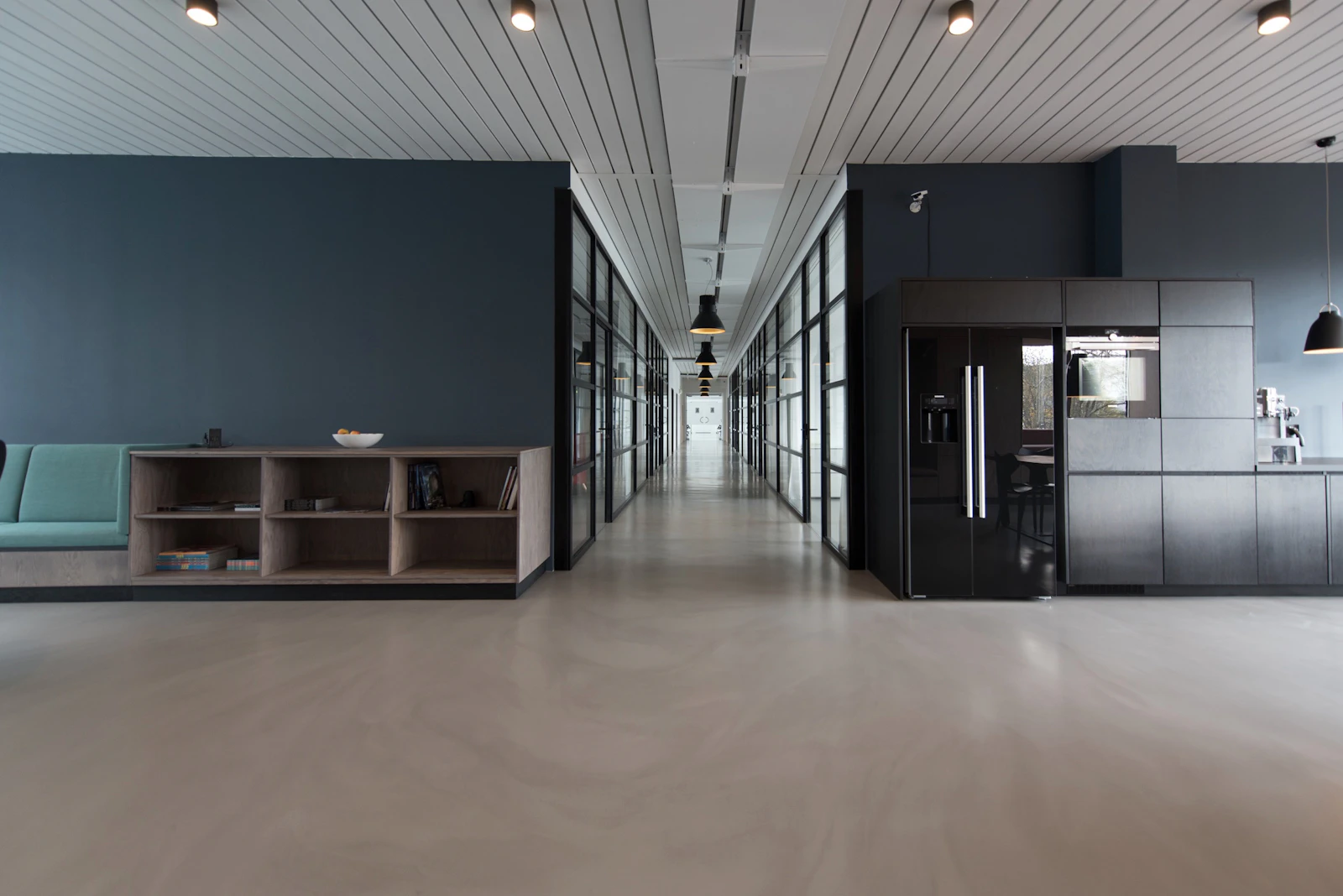
Choosing between coworking and a private office in the UAE is an operating decision, not a headcount formula. Two people making confidential calls all day can outgrow an open floor faster than a larger hybrid team that only meets twice a week.
This is general workspace guidance, not licensing or legal advice. Workspace requirements can depend on the authority, activity, entity and provider arrangement. Verify the exact product before relying on it for licensing, visas, banking, a registered address or regulated work.
Start with work patterns, not desk count
Coworking can work well when attendance varies, the team is hybrid, client visits are occasional and the business wants the lightest possible office administration. Community and shared amenities can be genuinely useful when people benefit from meeting others rather than needing a controlled environment.
A private office may be the better fit when people are in most days, calls are frequent or confidential, clients need a dependable place to meet, or the team needs monitors, equipment, storage, signage or a fixed setup. None of these are automatic rules: a well-run coworking operator may solve some of them, while a poorly specified private office may not.
If you are comparing Dubai options, start with the Dubai workspace directory. A central shortlist might include Business Bay, Jumeirah Lakes Towers and DIFC; tour the actual building rather than choosing from an area label.
Compare the day-to-day reality
| Factor | Coworking | Private office |
|---|---|---|
| Privacy and noise | Shared environment; assess phone booths and quiet areas | More control, but check walls, corridor noise and ventilation |
| Client meetings | Often bookable, sometimes credit-limited | Easier to host from a consistent base; meeting rooms may still be separate |
| Storage and fixed setups | Usually limited | More scope for monitors, equipment and secure storage |
| Branding and reception | Usually light-touch | May allow signage or a dedicated arrival experience, subject to the provider |
| Flexibility | Often simple to start or vary access | Depends on term, notice, expansion and downgrade terms |
| Cost predictability | Check credits, guests and add-ons | Check every inclusion and renewal change, not only rent |
| Documentation | Product- and authority-specific | Product- and authority-specific; never assume more because it is private |
The best test: map a normal Tuesday
Write down who arrives, where their calls happen, whether clients need a room, who needs a monitor or silence, how often guests appear and whether desks are shared. Then ask the operator to show you how that Tuesday would work in the exact plan being quoted.
This exposes the details a per-desk comparison misses: a meeting-room allowance that runs out by mid-month, a phone booth queue at noon, a locker that is too small for equipment, or a private room that lacks enough power, storage or guest seating.
Do not calculate only per-desk cost
Ask for the all-in monthly and one-time costs in writing. For coworking, check meeting rooms, lockers, guest access, printing, parking, extra day passes and phone booths. For a private office, check internet, utilities, meeting rooms, reception, parking, access cards, storage, setup fees and renewal changes. A private office can include more, but it is never safe to assume it does.
Keep documentation questions separate from workspace preference
The UAE Government notes that business premises must meet the relevant emirate and municipal requirements. That does not mean every coworking or private-office product supports every use case. Ask the authority and provider what exact document, address use and inspection support apply to your entity and activity. If an address-only product is under consideration, read the UAE virtual office guide before treating it as premises.
Compare the operating fit with WorkBeta
Use Dubai workspaces, Abu Dhabi workspaces or workspace search to request comparable options. Give every provider the same Tuesday scenario and the same list of required inclusions.