UAE Music Licensing Fees Start in December 2026: What Businesses Need to Know
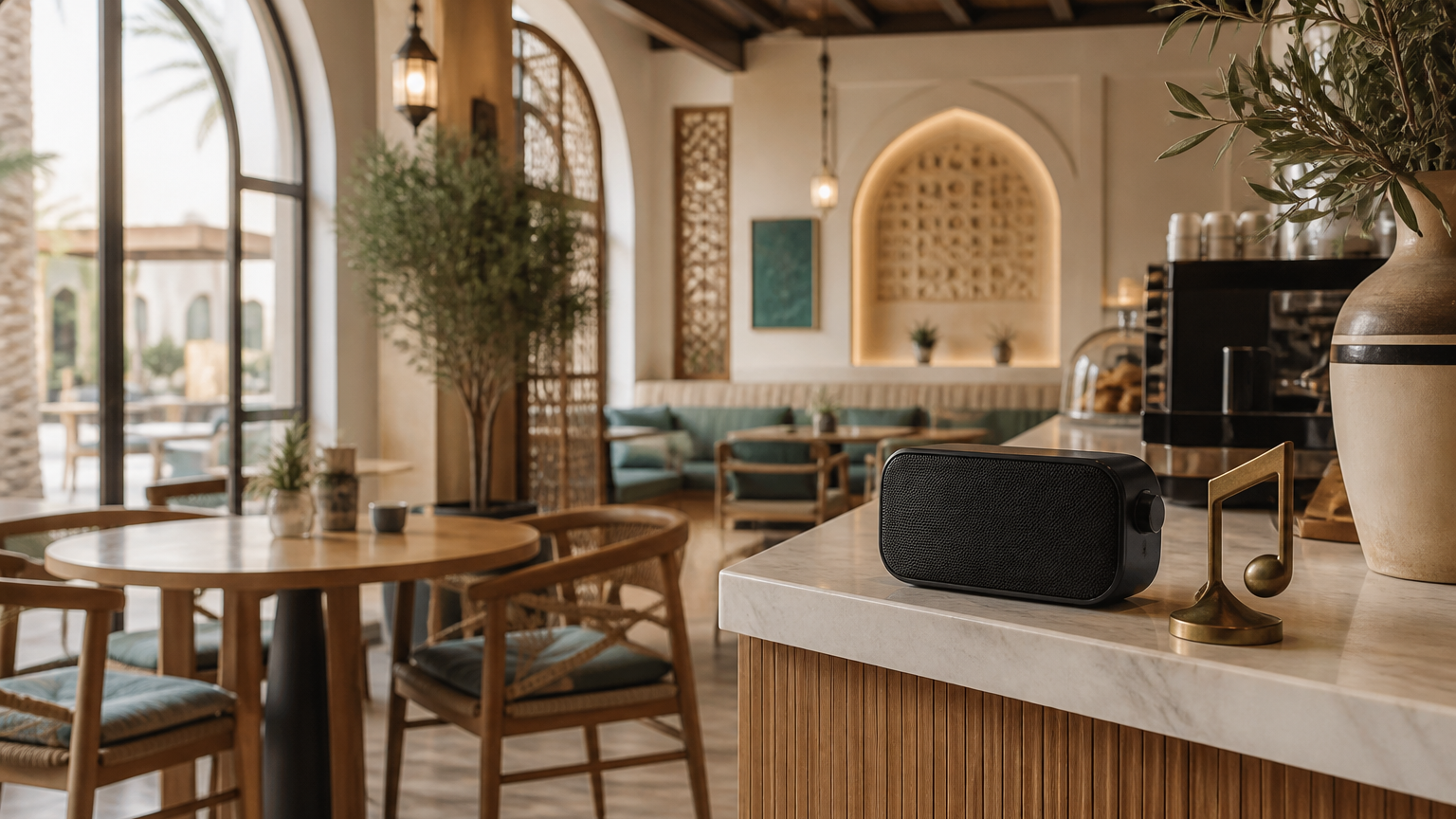
Businesses that play protected music for customers in the UAE will need to pay closer attention to music-rights licensing from December 2026. The UAE Ministry of Economy and Tourism has launched a national Collective Management in Music Guide under Ministerial Resolution No. 136 of 2026, with fees taking effect from 1 December 2026.
This is not a new government tax. It is a copyright and related-rights licensing framework for the public or commercial use of protected music. The applicable fee depends on the nature of the music use and the scale of the activity, so businesses should not assume that every venue pays the same amount.
Published on 28 August 2026.
This article is general business information, not legal advice. Businesses should verify their own music use against the latest Ministry announcement, the Ministry's Intellectual Property Legislations page and the applicable licensed rights-management organisation.
What changed?
The Ministry's new guide creates a standard framework for collective management of music rights in the UAE. It covers the licensing, collection and distribution of payments connected with protected musical works and related rights, including the interests of composers, songwriters, performers, musicians, producers and publishers.
The Ministry says the framework is intended to standardise fee structures, make rights administration clearer and reduce infringement risk while supporting the UAE's creative economy.
When do the fees begin?
The tariff appendix in the official guide states that collection under the approved tariff begins on 1 December 2026. Licences are issued for one year and are renewable under the applicable rules and conditions.
Which businesses may be affected?
The Ministry announcement identifies restaurants and cafés, shopping malls, fitness centres, hotels and floating hotels, airlines, radio stations, television channels, concerts and similar events. The guide also includes retail shops and commercial premises in its tariff schedule.
Whether a particular business needs a licence depends on how protected music is used. Background recordings, DJ services, live entertainment, broadcasts and integrated entertainment systems can fall into different categories. A quiet office where staff listen privately is not the same use case as a café playing music for customers or an event presenting music to an audience.
Example annual music-licensing fees
The examples below come from the tariff appendix to the Ministry's Collective Management in Music Guide. Gulf News separately reported the same tariff examples on 15 August 2026. The exact category and calculation applicable to a venue should still be confirmed.
| Business and music use | Scale | Example annual fee |
|---|---|---|
| Restaurant or café — recorded/background music | Up to 50 seats | AED 1,500 |
| 51–100 seats | AED 2,700 | |
| 101–200 seats | AED 4,800 | |
| Above 200 seats | AED 20 per additional seat; annual maximum AED 6,000 | |
| Restaurant or café with DJ services; entertainment club or similar venue | Up to 50 seats | AED 2,500 |
| 51–100 seats | AED 3,500 | |
| 101–200 seats | AED 6,500 | |
| Above 200 seats | AED 20 per additional seat; annual maximum AED 8,000 | |
| Retail shop or commercial premises | Up to 300 sq m | AED 1,700 |
| 301–700 sq m | AED 3,400 | |
| Larger premises | AED 60 per additional 25 sq m; annual maximum AED 20,000 |
These are compact examples, not a complete tariff catalogue. The official schedule also contains separate approaches for major shopping centres, fitness centres, hotels, broadcasters and airlines.
Who collects the fees?
The Ministry identifies the Emirates Music Rights Association (EMRA) and Music Nation as the two authorised organisations responsible for collecting fees and managing relevant music rights. The Ministry says the organisations are expected to collect and distribute payments to the creators and rights holders they represent.
Businesses should verify which organisation and repertoire apply to their use rather than paying an unsolicited request without checking the organisation's current Ministry authorisation and the basis of the proposed tariff.
Music licence or entertainment permit?
They address different questions. A music-rights licence concerns permission to use protected musical works and related rights. An entertainment, event, venue or performer permit concerns regulatory approval for an activity or event.
A business may need one, both or neither depending on its activity. Holding an entertainment permit should not be assumed to settle music-rights licensing, and holding a music licence should not be assumed to replace local event or entertainment approvals.
What about Spotify, YouTube and other streaming subscriptions?
A personal or ordinary streaming subscription gives access under that service's terms. It should not automatically be treated as permission to perform or communicate music publicly in a commercial venue.
That does not mean every use of Spotify, YouTube or another service is automatically unlawful in every circumstance. It means the subscription itself should not be assumed to satisfy the separate public-performance or collective-rights requirements that may apply. Businesses should check both the platform terms and the applicable music-rights licence.
Exemptions
The Ministry announcement lists educational and academic institutions, government entities, uses during national occasions, and non-commercial personal celebrations and events among the exempt categories. It also notes that the Ministry may exempt other uses or categories by separate resolution.
An exemption should be confirmed against current guidance. For example, a private non-commercial celebration is not the same as a ticketed event or an event operated as part of a commercial venue.
What should businesses do before December?
- Document the music use. Note each location, seating capacity or floor area, whether music is background, live or DJ-led, and whether customers or the public can hear it.
- Separate rights licensing from permits. List any local entertainment, event or venue approvals separately.
- Check subscription terms. Confirm what the music source permits; do not rely only on the fact that the account is paid.
- Verify the tariff category. Use the current Ministry guide and confirm the applicable category with an authorised collective-management organisation.
- Budget for renewal. The Ministry describes the licences as annual and renewable.
- Keep records. Retain the licence, calculation basis, payment record and the music-use information supplied with the application.
Why the framework exists
Collective management allows authorised organisations to administer rights and distribute payments across many creators and users. The Ministry says the guide is designed to improve transparency, fairness and governance while making lawful commercial music use easier to manage.
The framework also establishes a Cultural Support Fund for Music. According to the Ministry, 10% of the total amount collected will be allocated to the fund to support areas including composition, production, distribution, live performance, training and emerging talent.
Planning a UAE workspace or venue?
Music licensing is one operational detail among many when choosing a customer-facing workspace, café, hospitality venue or event setting. WorkBeta helps businesses compare workspace options across the UAE through workspace search, including Dubai workspaces and Abu Dhabi workspaces.
When comparing venues, ask each provider what is included, what activities the premises support and which licences or approvals remain the occupier's responsibility.